This work was published in The Avenue Journal, Issue X: Dogs
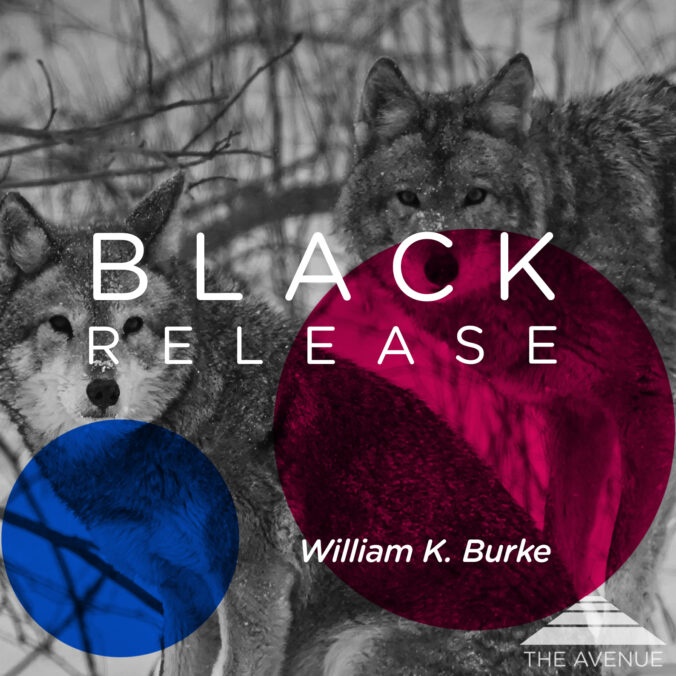
Black Release
by William K. Burke
Ridley was delivering the latest installment of his theory of everything. That month he was into biodynamic energy. “It bridges the stars, Greenie! We’re all connected. Everything, everywhere, and everybody!”
Something moved on my left. A rat dodged from an alley’s darkness. Confused by the sudden flood of our headlights, it cut left, then right, and aimed straight for our front tires. My stomach clenched. He should have trusted himself! But Mr. Rat had one last move. The soft thump of the tire flattening him never came.
“Go, little buddy!” Ridley cheered. A tiny blur vanished into the darkness in my rearview mirror. Ridley pulled on the bill of his baseball cap, and his mouth formed the old amused line. He was Ridley. I was Green. He made the rules. I made them real by believing them. It was our deal. We had met on the edge of ninth grade, the first day of summer football tryouts. Waiting in line to get smashed by the older kids.
“Don’t stop coming,” he had said that day. The first words I ever heard him say. “Cry, bleed, but just keep coming at them. The worst you can happen is you get stomped and everybody laughs at you.” So I wiped blood from my mouth, shins and knuckles, lay curled in a ball once for five minutes after a senior linebacker drove his knee hard as truth into my balls. I never cried when they could see me, and Ridley was always there. I hung on, started a few games at outside linebacker my senior year. Ridley made second team all-county end. He was the guy, making everything he did seem important and planned with his wry smile, his way of always having something to say whether events went as planned or fell apart completely. He succeeded with many women. I fumbled my chance with one. But we always had each other. Except when he did not call me back. Which had become most of the time until six months ago. Until the call that led to this night.
“It’s up here. Turn right,” Ridley pointed through the window, finger thin as twig. “That one.”
I pulled up to the newly painted red sliding door of a warehouse. A For Lease sign hung above the door. I got out of the van and Ridley slid behind the wheel. The warehouse door screeched when I pulled it open. In my mind, a police car had been closing in on us ever since we picked up the van on the side street where Ridley’s guy had left it. The flash of red and blue lights on the dull steel of the warehouse walls would spell the end of my dreams. I was an adjunct professor! An arrest would render my education worthless, cost me the thirty-nine thousand dollars a year I pulled down from my three jobs. I still had to worry about following the rules. It was alright for Ridley. Everything was alright for him. None of that mattered. What people thought, what the printouts said about his credit and trustworthiness. He had his pass. He smiled at me from behind the wheel of the rented van. We had used his credit card. It’s all on me little buddy. His plan. His risk. His party.
Up and down the street, nothing moved. I let go the door handle and stepped out of the way. Ridley pulled the van into the warehouse. Against the far wall were two waist-high box shapes draped with camp blankets. I pulled on a hanging strap and the door slammed down.
“Wait here,” Ridley said. He shut down the van and walked into the dark. I stood alone in the dark until Ridley turned on a bank of florescent bulbs. The bulbs flickered among the beams of the warehouse ceiling until the warehouse seemed bigger and emptier, a gray vault waiting. I noted a glass door to a small office space. Three folding chairs waited beside the door. Ghosts watched me from those chairs. My fifth grade teacher saying I did not try hard enough, Sarah saying she would see me in a few weeks. What had I achieved? What plans did I have? Who had I ever made happy?
Ridley came back to me, stopping at the van to rest his palms on his thighs like a basketball player catching his breath waiting for a free throw. I reached for him, but he waved me back, climbed carefully back into the van, and backed it slowly up to the cages. I opened the rear doors and checked the cargo space. The van had welded loops for tying down cargo on its floor. I laced lengths of yellow nylon cord through the tie-downs. We were ready.
When I pulled the blankets off the cages, the wolves were just furry shapes. Dogs, I told an imaginary cop. Big sleeping dogs. They did not move when we hoisted the cages into the van. The cages were heavy bastards; their weight bent me backwards when I lifted them into the van. Ridley sort of leaned on his side, kind of helping, but I had to pull the cage into my face to keep it from crushing him. I heaved the first cage into the van. Our shoulders met as I gave the cage a final shove. Ridley’s breath and sweat had a sour smell that made me see things I did not want to see. White walls, windows that showed only sky, a doctor who never looked up from his clipboard.
“We have four hours,” Ridley said, after I had tied down the cages and taken the driver’s seat again. “Drive straight out of here. Stay under the speed limit.”
“Sure.”
Heading out of town, I stopped for two full beats at each stop sign. In a half hour, we had left Portland behind. We were aimed for the Cascades, over the Southern Pass of Mount Hood and across the Warm Springs Reservation. At the Deschutes River, we would hang a right out to Prineville. We were just a couple guys getting an early start on their weekend. No reason we should get stopped. Then a nice steady drive up into the Ochoco National Forest. A last haul down a logging road we had scouted out a month ago. Stop at sunrise, breathe clean air, and watch two wolf tails disappear into the wilderness.
We had scouted the road on a day trip just after Ridley gave a more-than-meager slice of his life savings to a guy who knew a guy who knew a trapper in Alaska. Ridley told his guy he was middleman for an investment banker who wanted to treat the guests at his summer home to a real old-time wolf hunt. It was a plausible enough lie, Ridley sporting tweed and a tie and flashing the best of the old smile that he could manage.
We passed beyond the suburbs into the foothills of the Cascades. The beauty strip of uncut trees along the road made a tunnel for the headlights of the van. In the darkness beyond the trees were valleys filled with stumps, cut by muddy streams. The mighty forests of the West! Where men march like gods, and the last of the wild salmon die with their gills stuffed with field silt and cow manure. There was nothing to be done. We were humans, powerless against our own desires. Our daily blizzard of sounds and images made sure of that. But we had broken free. Ridley and I had become men of action. No marketing genius shaped our reality. We were moving. Going somewhere. Doing something. I opened the window for the cool air and forest smell, gently undercut by the muddy scent from the clear cuts. Ridley twisted in his seat to press his back against the door, all of him facing me, wide shoulders, thin arms and strangely delicate hands.
“Staying awake?” I asked.
“I want to touch them.”
“They are special. Wild.”
“That’s why I want to touch them.”
On our left, a sheriff’s car was parked outside a diner. I watched it as we passed, then checked the rearview mirror to make sure it stayed put.
“They’re sedated,” Ridley said. “You can pull over somewhere. Just for a minute.”
Ahead was a weathered sign beside an empty lot. The sign had been shot up by frustrated, or drunk, deer hunters and now read P ime R tail P oper y.
“There,” Ridley said. He pointed to a dirt road leading away from the sign.
“No.”
“C’mon, it’ll be fun. Educational.”
“Let’s just stick to the plan.”
“Of course. We would not want to let a moment of fun interrupt our crazy project.”
“No.”
He pulled hard on my arm. I pulled back and the van took our conflicting directions as a signal to head for a ditch beside some old growth firs. I jammed the wheel left, braked and sighed out a prayer. I felt that sickening moment when events have passed out of one’s reach. The van’s rear end slid down the lip of the road ditch. I stomped the gas, and the wheels spun, then caught and shot us forward onto the road.
“What the hell!”
“We had an adventure,” Ridley said.
“Spare me.”
“Not a chance.”
“Be quick.”
I found an unmarked access road and pulled us out of sight the best I could, tucking the van into the darkness under some trees. The lights of passing cars still flashed through the cab as we opened the cargo doors. The male’s eyes were open. His head lay against the barred door of his container. We took turns slipping our fingers through the cage door and stroking his nose. The nose fur was white with a gray stripe that ran up his face, spreading out above his eyes and mixing with the brown, white and black of his fur. The passing headlights spread shadows through the interior of the van, raised glints of gold in the wolf’s eyes. He watched us. That was all. We were in charge and he would accept that.
The trapper who caught him got two hundred dollars a pelt. He got five times that for keeping his mouth shut about these two. They had been born in dens on the edge of the great arctic plain. They had learned to play and to hunt, to mind their elders and follow the seasons of their prey. A week ago they had been part of a world thousands of years old. Now they were drugged. In our power. Passed from hand to hand with significant mark-up at every transaction. They knew the score. They knew it all the way. Old-time trappers saved bullets by digging out dens and clubbing the mothers and whelps. Wolves know the power of the kill. In their world, there is a dignity in accepting your end, in letting the great circle whose center is everywhere reclaim you. That was one of their great truths and we have always used it against them.
Ridley held his flashlight on the woods. The beam vanished in the shadows.
“I thought I was special. Since before I could remember I thought I had some special destiny. Football. Whatever. I was supposed to be something more. So I skipped doctors. I thought I knew it all. You were my sidekick. Sometimes I resented you. I thought you held me back. Now you will be the one to take everything forward.”
“For a while.”
“Yeah. A while.”
“That’s all any of us get. And you were special. Are special.”
“Not as special as I thought.”
“Who is?”
“Let’s name them.” He pointed his flashlight beam at the cages.
“Sure. I suppose.”
“I picked Archie and Juliet.”
“What do you think about that?” I asked the female. Now a Shakespeare heroine’s namesake betrothed to a comic book’s high school jock. She was curled up in the back of her cage, her tail folded over her nose, but her eyes open. Her fur had brown and something like the red of clay swirled through the gray. Her eyes glared in the flashlight beam.
We heard the sound of a heavy wheeled vehicle crunching gravel as it turned off the main road. A cruiser. Of course a cruiser. Out of the dark and shadows light from a passing car showed me the sheriff’s decal on the door. He hit his siren as he pulled into the lot. His spotlight caught us. I squinted my eyes shut and still the light forced its way through my eyelids. Ridley was out of breath. His lungs laboring cut through the sound of the cruiser’s engine.
“Damn,” I said.
“Stay right there,” a woman’s voice rasped through a loudspeaker. We heard a door open and shut. Only one door. Then came the ca-chunk of a shotgun being pumped ready.
“Keep your hands where I can see them.”
“Good evening, officer,” Ridley said. He raised his hands. “Just stopped to check our tie downs.”
“There are only the two of you?” the deputy was edging towards us, staying out of the light.
“Yes,” I said.
“Think hard. I hear anybody else moving around in there, they’ve got a problem.”
“Just us. We’re talking a couple sled dogs to my uncle’s place down the other side of Burns. They’re half-wild. From Canada. We had to sedate them. We just need to check them every couple hours. Sorry to disturb you.”
“Be a lot more disturbing if I find what I think I’m going to find in that van.”
“Whatever you need, officer.”
“Right now I need you two to lay down right there while I search your van. Face down, hands behind your back. Just like on TV. You can have a real-life law enforcement experience.”
We did as we were told. Pebbles bit into my forehead. The deputy secured our hands with those jumbo size zip ties they carry. It seemed to me she was making sure they hurt.
“Now let’s just see what we can see.”
She banged around in the van for way longer than it took to figure out that all we had were two carrier cages with two large sleepy dogs. I lay with my forehead and one cheek smashed into the cold wet gravel.
For half a century, wolves had been exterminated almost everywhere. But their numbers crept back. In a few places they had been reintroduced. Last summer, one made headlines when he wandered all the way from Idaho to Northern California looking for a mate. Packs were transplanted under the watchful eyes of wildlife scientists. Sometimes they let them go with a soft release. That meant the wolves were penned until they got used to the smells of their new home and formed pack bonds. Hard release was drop ‘em and go.
Now the wild boys, the tough guys, were back in charge, flying giant flags from the beds of their pickups. Rounding up the dark-skinned people and putting them into camps. It was starting. Killing what bothered you, what blocked your impulse to control everything, had come back into fashion. A Wyoming state senator addressed his colleagues while holding up the pelt of a mother wolf who had watched hunters dash her pup’s brains against tree trunks. It was thought she might have killed two cows, or perhaps a third, evidence was conflicting. The wolf had to die, though no one seemed bothered by the thousands of cattle that ranchers lost to disease and storms in Wyoming that year. You can’t shoot a storm. Not to any effect. Nothing must stand in the way of man’s dominance. Alaska was using National Guard helicopters to take out packs. Montana and Idaho had posted bounties.
“We have to do something,” Ridley had said. We were going to strike back. Make a small difference. Unless of course Officer Shotgun here figured out she had apprehended two desperate criminals who might have violated a federal wildlife statute, or maybe two.
“You fellows comfortable?” The deputy asked as she climbed out of the van.
“Just fine, officer,” I said. I had my head twisted towards the spotlight and raised my shoulders as much as I could. The tie off cut into my wrists. “We don’t have anything illegal on us.”
“Your friend doesn’t talk much.”
Ridley mumbled something. The words I caught were “pinhead” and “chickenshit.” Don’t take anything you don’t have to take was one of Ridley’s rules. I thought our current situation fit nicely into the category of crap you have to put up with.
“What’s that?”
“He’s fine, officer.”
“Is that right?”
“I’m just fine.”
“Glad to hear it. You stay fine. Stay fine and polite, and we’ll all part friends.” She swung her light through the woods, sending crazy shadows of tree trunk pillars into the sky. The light beam settled on the cages. Archie was waking up. Watching her. “Those are beautiful dogs.”
“They’re not pets. My uncle trains them up, sells them to people who run that race across Alaska,” I said. It was the story we had agreed to tell.
“That so?”
“Yeah. Truth be told they’re about half wolf. This breeder in Canada keeps this old boy wolf. Breeds him with husky dogs. Gets a hell of a price for the pups.”
Cars. Then something louder, a semi, swished by on the road. A wind had come up and the trees creaked and rubbed their branches together. The deputy seemed out of questions. She went back to her car and said something into her radio. Her steps came back to us.
“I’m cutting you boys loose. Have yourself a better day. You be more careful where you pull off this road. You’d be surprised what we got going on up here.”
As she said this she had placed one hand on my back while she snipped my hands free. She stepped back as soon as I was free and quickly cut loose Ridley’s hands. By the time we were standing up rubbing our wrists, she was in her car. Her tires slung gravel as she pulled her cruiser back onto Route 26. I gave her a head start. Ridley and I waited in the darkness, watching the lights of the few trucks that passed, listening to the wolves breathing in their cages. When it felt right I headed east again at five miles per hour under the speed limit.
“That was strangely erotic,” I said, mostly just to bust up the defeated silence between us.
“Just doing what they pay her to do, “ Ridley said. “They’ll smile and apologize for the inconvenience when they line us up for the last time.” He huddled himself against his door, bundled up a sweatshirt to make a pillow against the window. “Wake me the other side of Prineville.” His eyes closed, and his breathing slowed.
The eastern sky faded from sheer dark to the gray light that comes before true morning as we crossed a series of ridges leading toward the wide plains in the center of the state. Morning mist hung in the valleys and left a wet layer on the windshield. We had come into the sage country. Wide plains of nothing much rolled towards mountains still black before dawn. Among the sagebrush, patches of knee-high prairie grass held on. I opened my window and savored the smell, like herbs. There was also a touch of something dry and clean, almost like turpentine.
Six months ago I got the call. Ridley needed a ride to a clinic on Pill Hill, the giant medical center that sits on a ridge overlooking Portland. He didn’t say why or which clinic. Two hours later I stood beside him while a VA oncologist who avoided looking up from his notes kept saying “Metastatic SCLC.” Ridley had to make him say small cell lung cancer.
“It’s only a tragedy if I think I have work left to do,” Ridley said on the way down the hill.
Ridley had one of those vague jobs; something with software security and creating impromptu patches and knowing the privacy laws of half a hundred countries. But diving every day into that endless river of babble and posturing was not what he meant by work. Ridley was a fighter, a marcher. He knew the projections and understood where we were heading if we did not transform our society in a decade or two. He set up a trust to hold his assets and distribute them to the organizations he deemed most effective in the great fight. He paid enough attention to his treatment to give himself the most months. This last trip was an indulgence, he claimed. “Something for me to remember, to hold onto at the end.”
I took afternoons off work to take Ridley to chemo. It was after one of those appointments that Ridley had us catch the last hour at the wolf yard at the zoo. We watched two yearling females chase each other while their grandmother studied everything from the top of a small ridge. He laid out his plan. It was the perfect crime. Not least because we were not exactly sure in what way it was illegal. We would stay secret, move confidently and leave something behind us. Our legacy would roam the hills, howl from the ridge tops and listen for an answer.
As we passed through Prineville, the sun shone on the eastern side of the ridges but the valleys were still in shade. Ranch houses sat on the edge of the meadows. Smoke from the chimneys thickened the morning mist. A few ranchers worked among their barns and corrals. No one looked up at the sound of a vehicle crunching gravel at six in the morning. We passed a silver pickup truck with two bow hunters sorting gear at the rear of the bed. One of them looked up and waved at me as we passed. I saw the sign for Forest Service Road number 2673.
“Turn here,” Ridley said.
The road pretty much vanished a few miles up the mountain. It ended at a stump from an ancient tree, impossibly wide. A set of tire ruts slipped past to the right and went into a dark space under the trees. Something big smacked the van’s undercarriage as I eased around the stump. I headed into the darkness between two well grown ponderosa pines. Both had orange lines spray painted around their trunks.
“So much for them,” Ridley said.
We shoved our way through branches that clattered and scraped along the wide steel flanks of the van. One of the wolves whined, upset by the caterwauling. It was Juliet, now awake and alert. Imprisoned wolves can die from stress.
“Here’s as good as anywhere,” I said.
“Let’s find a clearing.”
The morning sun was soft outside the van. Light was winning its war with shadows among the branches of the pines, firs, and cedars. I scouted along a hunters’ trail, then quickly doubled back.
“That trail leads to a clearing,” I said. Ridley nodded and we set to untangling the cords and straps that held the cages in place.
Forepaws braced before him, Archie the wolf watched us through the bars of his cage. He wasn’t whining now. In the light, close up, I noticed something about wolves I had only read about. They had big feet. Our boy’s would leave a track as big as my splayed out hand. Without Ridley’s help, I was able to jockey the cage to the edge of the van. Ridley slipped out the back and stood beside me.
“Down there,” I said, and pointed at the trail.
When we lifted Archie’s cage, I was able to make sure most of the weight shifted onto me as I swung the van doors shut.
“We’ll be right back.” I said to Juliet. Branches caught at the cage and smacked the back of my head as I walked the trail backwards, taking most of the weight, knees bent and back aching a bit more with each step. Ridley faced me, watching Archie.
“Soon, big fella.” Ridley said.
Ridley’s face paled as he grimaced, willing his arms to hold, his feet to take each step. I shifted more of the cage’s weight my way. A few more steps and Ridley’s breath became harsh rasps. We made our way like this for a time that could have been forever but was probably about ten minutes. I had never done anything, would never do anything, but shuffle backwards through these woods. My back had always hurt like this.
“Look,” Ridley said.
We reached a thicket of mountain birches, the leaves gone yellow in the late summer frost at altitude. The ground was soft, like we might be on the edge of a marsh. Then the trees broke and we were at the edge of the wide plain.
We set down the crate. The grassland rolled to a horizon where the plain fell away and another, taller, mountain rose alone, almost a perfect pyramid shape, sunning its back like some great animal, trailing stands of forest that covered its low slopes.
Juliet was much lighter. Soon enough we had set her cage beside Archie. We heard rustling in the brush downwind of us.
“Are there bears up here?” I asked.
“Look,” Ridley said.
The bow hunter from the road closed in on us in a hurry. He was built for it. The long thin muscles of his arms and chest bulged under his camouflage t-shirt. In addition to a pistol, he wore a sort of black canvas harness that held a knife as long as my forearm, among a compass, map case, and water bottles.
“Morning,” he said. He stopped just out of arm’s length of us. His bow was strung and hung by a strap from his back. He had a sheath of arrows at his side.
“Morning,” I said. Ridley backed away a step.
“What’s going on?” He looked at the cage, then back at us.
“We just came up to work our dogs. We’re getting them broken in to run that big race. The one in Alaska,” Ridley said.
“Those are pretty sturdy cages.”
“You’d be surprised how light they are.”
“Let’s see the dogs.” He brushed right past us and went up to Archie’s cage. Archie about took the door off that cage. The sounds he was making suggested he would have been happy as a camp jay with a bag of popcorn to rip open Mr. Hunter’s Adam’s apple.
“You’re letting that thing out?” The hunter asked. One hand went back to relax around the grip of his pistol.
“That is the plan,” Ridley said.
“It’s a wolf,” he said. “They are wolves.”
“No,” I said. “ We are training our dogs.”
“Look at that damn thing.”
“Damn right,” said Ridley.
“You two got guts.”
Cued by my thoughts, a gray and white camp jay landed on Juliet’s cage, scouted around for scraps and bugs, and then soared back into trees, chattering disgust in its wake.
“It won’t work,” the bow hunter said.
“You going to stop us? Shoot us?” I asked.
“You got no gene pool,” said the hunter. “Say these two raise a litter. Who are the pups going to breed with? They won’t be able to build a sustaining breeding population. Not starting from just two.”
I perched on a boulder.
“This was not about hope,” Ridley said. “Hope makes you weak. That’s what old Big Foot knows.”
The hunter unslung his bow and sat on a log.
“Well, we get wanderers out here from the Wallowas. It could work out.”
Ridley nodded. I stepped behind Juliet’s cage and unlatched the door. It swung open, but Juliet stayed still, crouched in her cage, her eyes intent upon the ridge line.
“You can’t tell me she likes it in there,” I said.
“Try old Big Foot,” Ridley said. “See if he gets the idea.”
Archie burst out of the door as soon as he heard the latch open. Juliet saw Archie running onto the plain and scooted out of her cage after him. She caught him and took the lead, smaller, redder, already in charge. Two wolves loping across a wide grassy plain. Juliet turned and splayed her front legs, dipping her head, waiting for Archie. He pounced at her, his long body soaring till they were nose to nose.
The hunter was up and had notched an arrow before I could move. He loosed it, aiming too high for anything but tribute. Juliet lead Archie up a ridge. They ran together through the sun browned grass, twin blurs of gray, white and brown that rolled over ridge and were gone. A breeze caught the sweat that clung to my neck. Ridley laid a hand on my shoulder. It felt like bones and air and nothing at all. We watched the place where they had vanished while all around us the wind rippled birch leaves dappled by the sun, but we never saw them again.
William K. Burke was born in Melvindale, Michigan along the banks of the not so mighty Rouge River. When he was a boy the river was paved by the Army Corps of Engineers because, well, they had a lot of cement. They claimed they were protecting us from the small muddy Rouge sweeping us away in a biblical flood. William became a radical environmental journalist writing for In These Times, Greenpeace, and The Progressive among many others. It is possible that his birthplace and that early career choice were not unrelated. Since turning to fiction, Burke has published 10 stories in publications including Action, Spectacle, The Opiate, and 34th Parallel. He is currently the Director of The Imagine Possibilities Center, a progressive day program for people experiencing developmental disabilities. Read more of his work at www.williamkburke.com
You can purchase The Avenue Journal Issue X: Dogs in paperback at Bookshop.org, or, if you prefer it in digital format, you can download the ebook in .epub format for pay-what-you-can (suggested donation $9) at ko-fi.